Infrared Thermographer Certification No. 14071
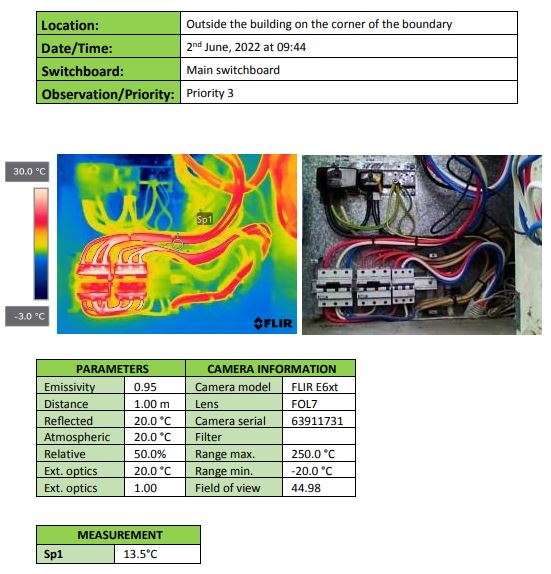
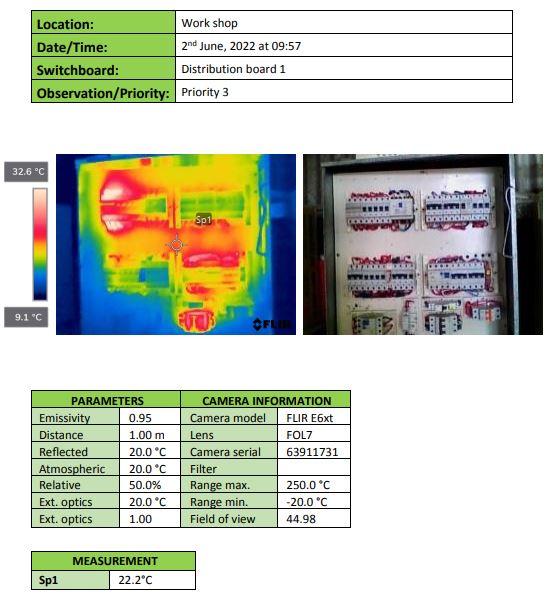
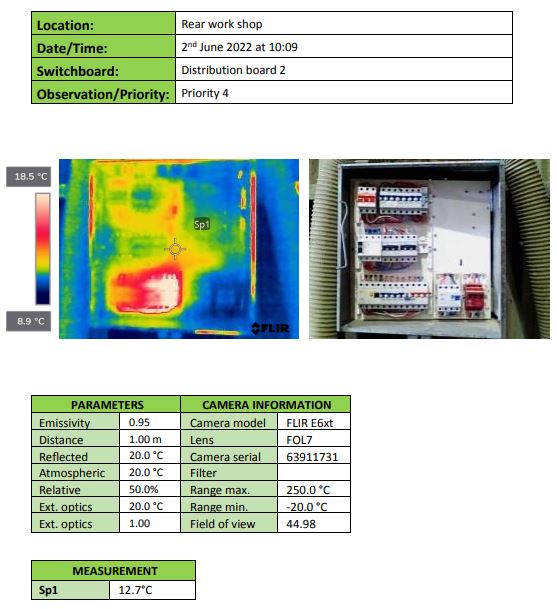
Thermal imaging can detect potential issues that cannot be seen without using a thermal imagaing camera

Preventing serious problems or unplanned downtime within a business
-
Regular inspections: Willec Electrical can perform regular electrical thermal imaging inspections of electrical systems, which can detect potential hazards before they become serious problems.
-
Identifying hotspots: Willec Electrical can use electrical thermal imaging to identify hotspots or temperature changes in electrical components that may indicate an overloaded circuit, a malfunctioning component, or loose connections. By identifying these hotspots early, corrective action can be taken to prevent the situation from escalating and potentially causing a fire.
-
Preventive maintenance: Willec Electrical can use thermal imaging as part of a preventive maintenance program, which can help identify potential issues and schedule maintenance proactively rather than waiting for a failure to occur.
-
Compliance with regulations: Willec Electrical can ensure compliance with industry regulations that require regular inspections of electrical systems to prevent potential issues by employing the services of a qualified thermal imager.
-
Improved safety: Regular thermal imaging elec items and mechanical components can identify serious issues that could save a business from loss and downtime, injury or fires within the workplace keeping personal and equipment safe.
Overall, by utilizing electrical thermal imaging as part of their electrical services, Willec Electrical can provide a proactive approach to fire prevention, helping to minimize the risk of fires and improve safety for their clients.
We Provide Expert Thermal Imaging Reports
INTRODUCTION - This example infrared inspection report provides information of thermal patterns detected in your electrical equipment / system at the time of the inspection. A list of all equipment scanned is in this report. This includes digital and thermal images and all relevant information. This report meets the requirements of the Inspection Institute Standard for Infrared Inspection of Electrical Systems and Rotating Equipment. I am a qualified Thermal Imager, certified at Level 1. Certification number 14071.
FOLLOW UP - We recommend regular tests (yearly) of equipment to reduce unscheduled downtime and failures.
TECHNICAL INFORMATION - The temperature observations that are detailed in our reports can be referenced to the Australian standards “Operating/Limiting Temperatures” information, which may assist you in your risk analysis of each observation, further information can be found in the Australian standards AS/NZS 3000 2018 Section 3 and AS/NZS 3439.1 2002 Clause 7.3 & 8.2.1.
PRIORITY RATINGS - The priority ratings are allocated based on the standards, the temperature difference between phases, across switches, contactors, or other components, the loading and application of the circuit, the operating temperature, and most importantly the actual fault temperature.
TEMPERATURE DIFFERENCE - The temperature difference between the faulty component and a comparable component which may be reasonably expected to be operating at normal temperature. Across a switch, or contactor or similar device, or on a balanced three phase system, we should expect some components to exhibit the same temperatures under normal conditions. The presence of a substantial Temperature Difference may indicate the presence of a fault condition.
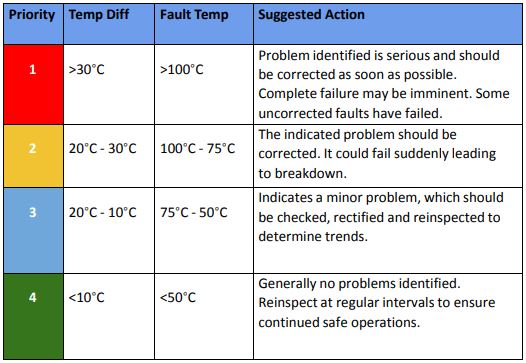
FAULT TEMP - The actual temperature of the fault.
ASSUMPTIONS - The following general assumptions may be made:
1. Where fuses/components are hot at one end it usually indicates that a problem exists with the contacts and/or connections.
2. Where fuses/components are hot overall, the fuse size and load should be checked for correct rating.
3. A high temperature on both sides of components suggests faulty contacts/connections and/or out of balance or overload. Load testing may confirm/eliminate load imbalance as a problem.
4. Where contactor terminals are hot and the connection screws are tight, the problem may be internal.